.webp)


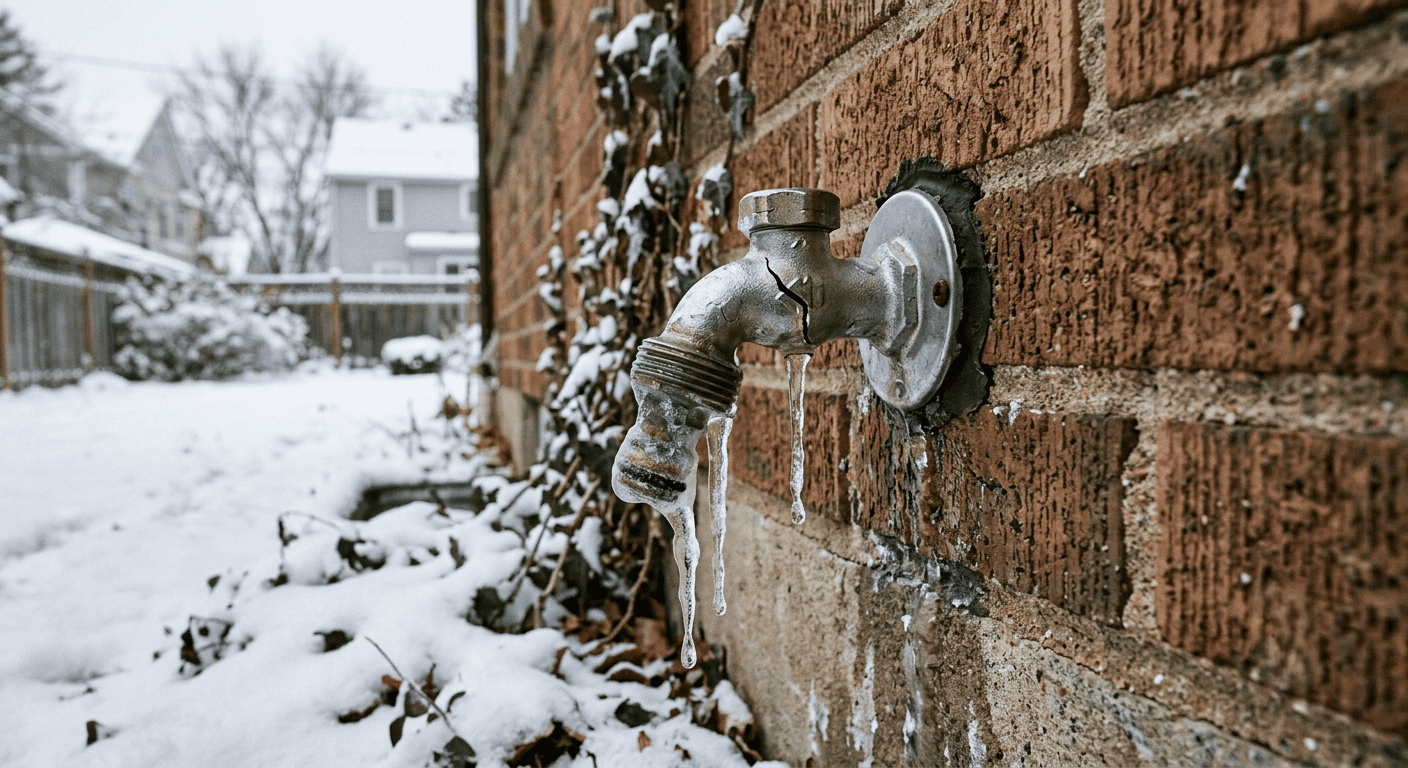
Every spring, Minneapolis plumbers see the same thing: homeowners turn on their outdoor spigot for the first time since fall, and either nothing comes out, or water sprays from somewhere it shouldn't. In most cases, the damage happened months earlier, during the first hard freeze — it just wasn't visible until the ground thawed. Here's what actually causes spigot failure in a Minnesota winter, how to tell if yours is already damaged, and what a repair really involves.
What Is a Spigot, and Why Minnesota Winters Are Especially Hard on It
A spigot — also called a hose bib, sillcock, or outdoor faucet — is the valve on the outside of your house that you connect a hose to. Unlike the plumbing inside your walls, a spigot sits right at the boundary between your heated home and the outdoor air, which makes it one of the most exposed points in your entire plumbing system. When water sits inside the pipe and temperatures drop below freezing, that water expands as it turns to ice — and expanding ice inside a pipe or valve is strong enough to crack metal. The Twin Cities' long stretch of sub-freezing nights, often from November through March, gives a poorly protected spigot months of opportunity to fail.
Frost-Free vs. Standard Spigots: The Difference That Matters
Not all outdoor faucets are built the same way, and knowing which type is on your house changes how much risk you're carrying every winter:
- Standard spigots have their shut-off valve right behind the outdoor handle, meaning the valve itself — and the water sitting behind it — is exposed to the full outdoor temperature all winter. These require manual winterization every year: shutting off an interior valve and draining the line before the first freeze.
- Frost-free spigots (also called frost-proof sillcocks) use a long stem that places the actual shut-off valve several inches inside the heated part of the house. When you turn the spigot off, water drains out of the exposed exterior section automatically, so there's little to no water left in the part of the pipe that's actually exposed to the cold.
You can usually tell which type you have by looking at the handle from inside your basement: a frost-free spigot has a noticeably long pipe running back from the exterior wall, while a standard spigot's valve sits right at the wall.
The #1 Cause of Spigot Freeze Damage (and It's Not the Cold)
Here's the detail that surprises most homeowners: even a frost-free spigot will freeze and crack if a garden hose is left attached over the winter. The hose blocks the spigot's self-draining design, trapping water in the exposed exterior section — which then freezes exactly like it would in a standard spigot. This is, by a wide margin, the most common cause of spigot failure we see, and it means a lot of homeowners with "freeze-proof" faucets end up with a burst pipe anyway simply because a hose was still connected in October.
The fix costs nothing: disconnect every hose from every outdoor spigot before the first hard freeze, even on a frost-free model.
Signs Your Spigot Already Has Freeze Damage
Freeze damage rarely shows up the moment it happens — it usually reveals itself the next time you try to use the spigot:
- No water flow at all when you turn the handle, which usually means ice is still blocking the line
- Reduced or sputtering flow, a sign the pipe partially froze and the interior may already be cracked
- Water leaking inside the house near where the spigot's supply line runs, especially in a basement wall or ceiling — this means the crack happened behind the wall and the ice has since thawed
- Water dripping from the spigot itself when it's supposedly shut off, which usually points to a valve washer or seal damaged by the freeze-thaw cycle
- Visible cracking, corrosion, or a spigot that feels loose at the point where it meets the exterior wall
If you spot any of these, it's worth having it checked before you reconnect a hose and start using it for the season — running water through a cracked line can send it straight into your foundation wall or basement instead of outside.
What to Do If You Suspect a Frozen or Burst Spigot
If a spigot won't turn on, don't force the handle — that can shear off a valve that's already stressed by ice. If you can access the interior shut-off valve for that line, turn it off to stop feeding water toward a possible crack until it can be inspected. If you don't have — or can't find — a dedicated shut-off for that spigot, and you notice any sign of water inside the house, shutting off the main water supply is the safer move until we can take a look.
Repair or Replace?
A straightforward repair — a new washer, a repacked valve stem, or a replaced vacuum breaker — is often enough if the spigot itself froze without cracking the body or the interior supply line. But if the freeze actually split the pipe, patching it isn't a lasting fix, since the same vulnerability that let it freeze once is still there. In that case, replacing a standard spigot with a proper frost-free model is usually the better long-term investment: it's a modest cost compared to the water damage a burst pipe can cause behind a wall, and it removes the annual winterizing chore going forward.
Winterizing Your Spigots Before the Twin Cities' First Freeze
Whether you have standard or frost-free spigots, a few steps each fall go a long way:
- Disconnect every hose from every outdoor spigot — this is the step people skip most often, and the one that causes the most damage.
- Shut off the interior valve feeding each standard spigot, if your home has one (frost-free spigots handle this automatically, but check that the valve isn't stuck or corroded).
- Open the spigot after shutting the interior valve to let any remaining water drain out, then close it again.
- Add an insulated faucet cover for extra protection during Minnesota's coldest stretches, especially on older or standard spigots.
- Check for a working anti-siphon valve, which is required by code on most modern spigots and prevents contaminated water from being pulled back into your home's supply.
Why Homeowners Choose SOS for Spigot Repair
- We diagnose before we replace. If a repair will genuinely hold, that's what we'll recommend — not an automatic upsell to a full replacement.
- We know Minnesota freeze damage. From a simple washer replacement to a cracked supply line hidden behind a basement wall, we see the full range every spring.
- Frost-free upgrades done right. Installed at the correct downward slope with proper backflow protection, so the fixture actually performs the way it's designed to.
- Upfront pricing. You'll know the cost before any work starts, whether it's a quick repair or a full spigot replacement.
Serving Prior Lake and the Twin Cities Metro
SOS Home Services is a family-owned plumbing company based in Prior Lake, MN, providing spigot and outdoor plumbing repair within a 50-mile radius, including Minneapolis, St. Paul, Bloomington, Eagan, Eden Prairie, Burnsville, Lakeville, Savage, and Shakopee — available 24/7.
Frequently Asked Questions About Spigot Repair
My spigot won't turn on this spring — is it broken?Not necessarily. If it was frozen at some point over the winter, it may just need a little time to fully thaw, or there could be a small amount of remaining ice. If it still doesn't flow after a mild day or two, or if you notice water inside the house, it's worth having it inspected before you use it.
Do frost-free spigots ever freeze?Yes, almost always because a hose was left attached, which blocks the self-draining design that makes them frost-free in the first place. A properly installed and correctly used frost-free spigot rarely freezes on its own.
How do I know if my spigot is frost-free or standard?Check the handle from inside your basement or crawl space. A frost-free spigot has a noticeably long pipe extending back from the exterior wall before it connects to the water line; a standard spigot's valve sits right at the wall.
Is it worth upgrading to a frost-free spigot?If you currently have standard spigots, yes — the cost is modest compared to the water damage a burst pipe can cause, and it removes the need for careful manual winterization every single year.
Can I repair a cracked spigot myself?A simple washer or gasket replacement is a reasonable DIY job for some homeowners. But if the pipe itself has cracked — especially if it's behind a wall — that's a job for a licensed plumber, since a missed crack can lead to hidden water damage.
What should I do right now if I think my spigot is leaking behind the wall?Shut off the water supply to that line if you can access the valve, or shut off your home's main water supply if you're not sure. Then call us — we can locate and repair the damage before it causes further harm to your walls or foundation.
Dealing with a stubborn or leaking outdoor spigot? Call SOS Home Services at (612) 636-4357 or book your visit online at callsosnow.com. We serve Minneapolis and the entire Twin Cities metro, 24/7.