.webp)


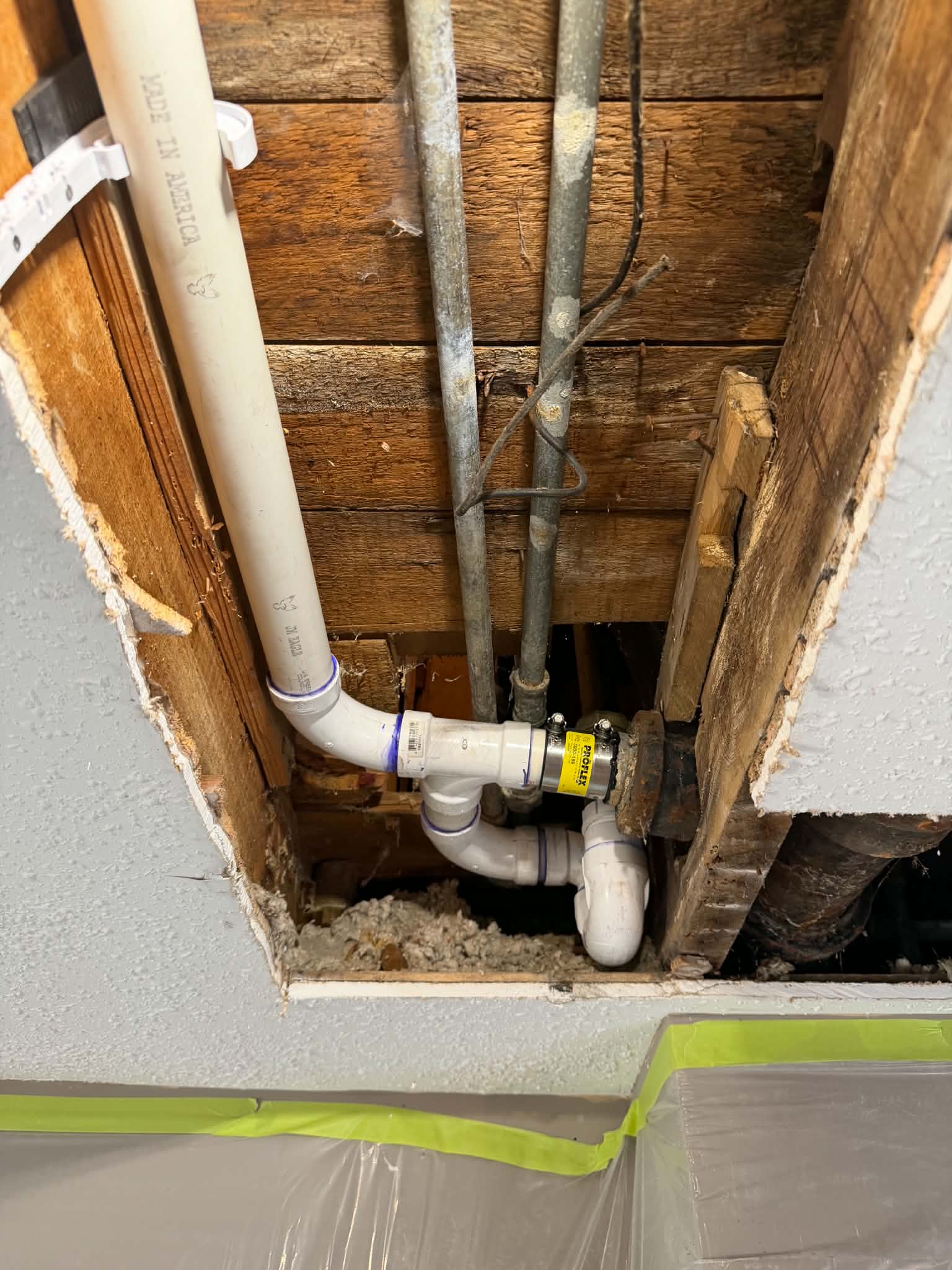
A slow kitchen sink is annoying. A drain that clogs again two weeks after you cleared it is a sign of something else going on. In Minneapolis and the rest of the Twin Cities metro, recurring drain problems are rarely bad luck — they're usually tied to the age of the home, the trees in the yard, or what's happening underground when the snow melts. Here's how to tell a simple clog from a bigger drain or sewer line problem, and what actually fixes each one.
Single Fixture Clog or Main Line Problem? How to Tell the Difference
Not every slow drain means the same thing, and the fix is different depending on where the blockage actually is:
- One drain is slow or clogged (just the kitchen sink, or just one bathroom) — this is almost always a localized clog in that fixture's branch line: hair, grease, soap scum, or food debris built up close to the drain.
- Multiple drains are slow at the same time, or a drain backs up when you run the washing machine or flush a toilet elsewhere in the house — this points to a blockage further down, in the main line that carries wastewater out of the house.
- Gurgling sounds from toilets or floor drains, especially right after you run water somewhere else, usually mean air is trapped behind a partial blockage in the main line.
- Sewage odor inside the house, or a floor drain in the basement backing up, is a main line symptom that shouldn't wait.
If it's just one drain, a plunger or a simple snake job is often enough. If it's multiple fixtures acting up together, the problem is downstream of your house, and that's when it's worth calling a plumber before it becomes a full backup.
Why Minneapolis Homes Clog More Than You'd Expect
Two things make drain and sewer problems more common here than in newer parts of the country, and neither has anything to do with how carefully a homeowner uses their sink.
The age of the pipes. Much of Minneapolis and St. Paul was built out before PVC became the standard, which means a large share of homes still have original clay tile or cast iron sewer lines running from the house to the city main. Clay pipe is durable against chemical corrosion, but it's brittle, and its joints were never sealed the way modern pipe is — which brings us to the second issue.
The trees. Minneapolis and St. Paul are among the most heavily tree-canopied cities in the country, and that's exactly the problem for older sewer lines. Tree roots are drawn to the warm, oxygen-rich moisture inside a sewer pipe, and they find their way in through the smallest crack or loose joint in aging clay or cast iron. Once a root gets a foothold, it doesn't stop — it thickens, catches toilet paper and grease as wastewater flows past, and gradually narrows the pipe until it blocks completely.
Think of a root intrusion like a slow leak in a tire. The first time it happens, you can clear it and drive on. But if the crack that let the root in is still there, it'll grow back — usually faster the second time, because it already found the path in.
The Other Local Culprit: Spring Snowmelt and Heavy Rain
Even sewer lines with no root problem at all can get pushed to their limit during the Twin Cities' spring melt or a heavy summer downpour. If a line already has a partial restriction — some grease buildup, a minor belly in the pipe, a small amount of root growth — that restriction usually isn't enough to cause problems on a normal day. But add the extra volume of melting snow or storm runoff, and the same partial blockage can turn into a full backup, often showing up first in a basement floor drain, since that's typically the lowest point in the system.
This is why a drain that's "been a little slow for a while" is worth addressing before spring, not after the first backup of the season.
Why We Don't Recommend Chemical Drain Cleaners on Older Pipes
It's tempting to reach for a bottle of chemical drain cleaner when a drain is running slow, and for a simple, well-maintained line, an occasional use usually isn't the end of the world. But we're honest with Twin Cities homeowners about the downside, especially in a city full of older clay and cast iron pipe: these chemicals generate heat as they work, and repeated use can actually damage aging pipe joints and seals — the exact spots where root intrusion gets started in the first place. They also do nothing for a root mass or a structural problem like a bellied or cracked pipe; at best, they clear the immediate clog and leave the underlying cause to come back.
If a drain keeps needing the same bottle of cleaner every few months, that's a sign the real problem hasn't been addressed — not a sign you need a stronger chemical.
How We Actually Diagnose a Drain Problem
Guessing at what's wrong underground leads to guessing at the fix, so diagnosis starts with a camera. A sewer camera inspection lets us see exactly what's going on inside the line — root intrusion, a cracked joint, a bellied section holding standing water, or simply years of grease and debris — before we recommend anything. That means you're paying for the fix your line actually needs, not a generic service.
Clearing the Blockage: Snaking vs. Hydro Jetting
Once we know what we're dealing with, there are two main ways to clear a blocked line, and they're not interchangeable:
- Snaking (rooter service) uses a motorized cable with a rotating cutting head to punch through a blockage and cut back root growth. It's fast and effective for restoring flow, and it's the right call for most routine clogs and moderate root intrusion.
- Hydro jetting uses high-pressure water to scour the entire inside diameter of the pipe, not just cut a channel through the middle of a clog. It clears grease buildup, root remnants, and debris more thoroughly than snaking alone, which is why it's often the better choice for a line with a history of repeat clogs.
Snaking gets water flowing again quickly. Hydro jetting gets the pipe closer to clean. Which one makes sense depends on what the camera shows — and we'll tell you honestly which is worth the extra cost for your situation.
When It's More Than a Cleaning: Pipe Repair
Clearing a line restores flow, but it doesn't fix a pipe that's already cracked, collapsed, or so root-damaged that it will just clog again in a few months. If the camera inspection shows structural damage rather than just buildup, that's a conversation about repairing or replacing the affected section of pipe — and we'll walk you through what that actually involves for your specific line before any work starts, including a clear price. We'd rather have that conversation up front than have you pay for a cleaning that only buys you a few more months.
Why Homeowners Choose SOS for Drain Repair
- We diagnose before we recommend. Camera inspection tells us what's actually happening in your line, so you're not paying to guess.
- Honest advice on snaking vs. jetting vs. repair. We'll tell you which is genuinely worth it for your situation — not just upsell the most expensive option.
- We know Minneapolis and St. Paul's older plumbing. Clay tile, cast iron, aging joints — we see it constantly in homes throughout the metro, so it's not a surprise when we open up your line.
- Upfront pricing. You'll know the cost before we start, whether it's a straightforward snake job or something more involved.
Serving Prior Lake and the Twin Cities Metro
Based in Prior Lake, MN, SOS Home Services provides drain and plumbing repair within a 50-mile radius, including Minneapolis, St. Paul, Bloomington, Eagan, Eden Prairie, Burnsville, Lakeville, Savage, and Shakopee.
Frequently Asked Questions About Drain Repair
How do I know if my clog is a simple fix or a bigger problem?If only one drain is affected and it's the first time it's happened, it's likely a localized clog. If the problem keeps coming back, affects more than one fixture, or comes with gurgling sounds and odors, it's worth having the main line inspected before it becomes a full backup.
Is it normal for older Minneapolis homes to have drain problems?It's common, not something you did wrong. Homes built before PVC became standard often still have original clay tile or cast iron sewer lines, and the mature trees that make Twin Cities neighborhoods so nice are the same ones whose roots seek out those older, less sealed joints.
Are chemical drain cleaners safe to use?For an occasional, minor clog in a well-maintained line, they're generally fine. Repeated use on older pipe can do more harm than good, since the heat they generate can stress aging joints and seals. If you're reaching for one every few months, the underlying problem needs a real diagnosis instead.
What's the difference between snaking and hydro jetting?Snaking uses a rotating cutting head to punch through a blockage and is the right call for most routine clogs. Hydro jetting uses high-pressure water to clean the full inside of the pipe, which works better for lines with a history of repeat clogs or heavier buildup. We'll tell you which one your line actually needs after a camera inspection.
Why does my basement floor drain back up during spring thaw or heavy rain?The floor drain is usually the lowest point in your drainage system, so it's often the first place a backup shows up when a partially restricted line gets more volume than it can handle — which is exactly what spring snowmelt and heavy storms cause.
Do you repair sewer lines, or just clear clogs?We diagnose the actual problem with a camera first. If it's buildup or roots, we clear the line. If the camera shows a cracked, bellied, or collapsed section of pipe, we'll walk you through repair options and a clear price before any work begins.
Dealing with a slow or recurring drain? Call SOS Home Services at (612) 636-4357 or book your visit online at callsosnow.com. We serve Minneapolis and the entire Twin Cities metro.
For recurring drain problems and related pipe repairs, see our drain cleaning and repair service.